All Publications

The report notes that the government has developed economic and fiscal policies and a poverty-reduction strategy in cooperation with the World Bank and the International Monetary Fund. According to the 2007 annual survey of economic freedom conducted by the Heritage Foundation/The Wall Street Journal, Armenia's economy is 69.4% free, which makes it the world's 32nd freest economy. 

The oil sector is going through some fundamental changes: national oil companies now control the bulk of production, with international petroleum companies more often playing a secondary role in making decisions on production, investment and markets; prices are at their highest and are more volatile than ever before...

Public sector energy efficiency is an important area which would benefit from ongoing international attention. In nearly every instance where public money is spent for government operations or for the provision of public utilities, there is good potential to improve energy efficiency. The overall potential for energy savings and greenhouse gas emissions reductions are even larger where the public sector is an important buyer of goods and services.

The In-Depth Energy Efficiency Review of Bulgaria was undertaken in March-April 2008. The review team was led by Ireland and included representatives from Austria, Denmark and Latvia. The team was supported by the Energy Charter Secretariat.

Limited domestic energy resources, together with aging capital and incomplete market structures mean energy supply to support sustainable development in Albania has not always been reliable. Energy costs represent around 20% of the value of industrial production on average. Household energy growth is particularly strong in electricity, with increasing use of electric space heating, with winter peak demand now some 70% higher than the summer peak.

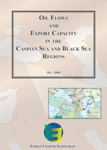
The Caspian region holds substantial oil reserves, which are larger then the reserves of the North Sea or the US. However, most of these reserves are landlocked and need transit to access international markets. In addition, oil transported to the Black Sea then has to pass the increasingly congested Turkish Straits and add to the risks linked to tanker traffic through this highly frequented waterway.

At this time Bosnia and Herzegovina has no official Energy Policy or Strategy, though work is in progress at the state and entity levels to develop an energy strategy. Two projects will contribute to the development of an energy strategy for Bosnia and Herzegovina: the EC funded TASED project, which aims at compiling an energy database and energy balance model as part of its mandate and the Energy Study in Bosnia and Herzegovina, recently finished, that provides additional data. The Strategy should be completed by December 2008.

Investment Protection and the Energy Charter Treaty, edited by Graham Coop and Clarisse Ribeiro, General Counsel and Legal Counsel, respectively, of the Energy Charter Secretariat, is authored by the most prominent and leading experts on the Energy Charter Treaty. The book, issuing from the Conference on 'Investment Protection and the Energy Charter Treaty' organised by the Energy Charter Secretariat, the Stockholm Chamber of Commerce and the International Centre for the Settlement of International Disputes in May 2007, provides in-depth analysis of the most pressing issues arising under the ECT.

It was noted that Kyrgyzstan acceded to the World Trade Organisation (WTO) in 1998 and has been pursuing market-based reforms, privatisation of state-owned enterprises and promotion of foreign direct investment (FDI) to support economic development. The Government has taken steps to improve the legal, regulatory and institutional frameworks for investment in the country, adopted a freely convertible currency regime, and there are no foreign exchange controls.

Among other features of the energy sector and the economy at large, it is noted that Belarus still maintains features of a planned economy, with the government controlling key factors of production and the decisions of economic agents. The tax burden is relatively high and government revenue is distributed to support certain companies and employment, as well as social programmes.

This ICMS report on Georgia aims to inform all relevant parties in the Charter process about the current situation regarding the energy market structure and the climate for foreign investment.

The In-Depth Review of Latvia was carried out in March 2007 by a team of experts led by Norway and composed of representatives of Denmark, Lithuania, and Ukraine, supported by the Energy Charter Secretariat. Improvements in Latvia's energy efficiency indicators have resulted from structural and energy sector market reforms, but some implemented energy efficiency initiatives have also contributed to the descending energy intensity trend. Latvia's energy mix also has a large and increasing share of renewable energy, based on exploiting the country's natural hydro and biomass resources.

Foreign direct investment is playing a major role in Turkey's economic development and prosperity, and - as highlighted in this report from the Energy  Charter - the Turkish authorities have taken major steps in recent years to create a favourable and non-discriminatory investment climate.

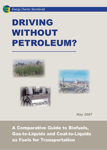
The report puts into context the production and use of non-petroleum transportation liquid fuels (bioethanol, biodiesel, and synthetic fuels) in key markets. Both 'first generation' biofuels (for which technologies are already commercially deployed) and 'second generation' fuels (for which research and development is underway, but without, as yet, commercial deployment) are considered.

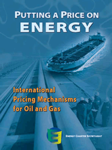
This report describes and analyses the development of international oil and gas pricing mechanisms. It is organised in a way that each chapter can be read on its own; the factual chapters and sections on oil, gas in North America, gas in the UK, gas in Continental Europe and liquefied natural gas.

To top