All Publications

The Gobitec concept represents the idea of producing clean energy from renewable energy sources in the Gobi Desert and delivering the produced energy to high-demand regions. It is planned to transmit this energy via the planned Asian Supergrid (ASG), which would connect Russia, Mongolia, China, South Korea and Japan.

The Knowledge Centre Review's goal is to inform Charter members, observers, partners, and colleagues about Charter activities and at the same time provide them with fresh research on topics of particular importance in today's energy world.

The Knowledge Centre Review's goal is to inform Charter members, observers, partners, and colleagues about Charter activities and at the same time provide them with fresh research on topics of particular importance in today's energy world.

The Knowledge Centre Review's goal is to inform Charter members, observers, partners, and colleagues about Charter activities and at the same time provide them with fresh research on topics of particular importance in today's energy world.

Given the development of power networks in all energy systems within the Unified Power System of Central Asia (UPS CA), conditions have been created urgently calling for a revision of the existing Electricity Transit Methodology.

This assessment aims to demonstrate that one of the most important provisions of the Energy Charter Treaty is that on investment promotion and protection as well as creation of a stable regulatory framework. These provisions are designed to bring potentially interested public and private investors to countries which have ratified the Treaty.

Ensuring adequate global energy supply will require significant and timely investment and international cooperation along the entire supply chain. Many national and international energy companies that operate across the borders develop new tactics and strategies to address challenges and to satisfy complex criteria of energy security for both energy consuming and energy producing countries.

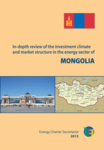
This review presents comprehensive information about the conditions for energy investors in Mongolia, which is one of the fastest growing economies in the world. The government of Mongolia is facilitating market-based reforms of the energy sector in all areas: institutional, legislative and industrial. It has undertaken a thorough reform of the investment climate in the energy sector in a direction more favourable to foreign investors.

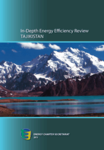
The first In-depth review of energy efficiency policies of Tajikistan was carried out in 2012, following an invitation from the Ministry of Energy and Industry of the Republic of Tajikistan. The review team that visited Dushanbe included officials from Estonia, Sweden and Switzerland, as well as officials from the Energy Charter Secretariat.

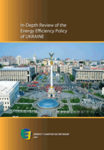
This first in-depth review of energy efficiency policy of Ukraine was carried out in 2013, following an invitation from the State Agency on Energy Efficiency and Energy Savings of Ukraine. The review team that visited Kiev comprised officials from Austria, Kazakhstan and the Slovak Republic and the energy efficiency team of the Energy Charter Secretariat.

Global energy governance is a topic which has come under increasing levels of scrutiny at the moment. Debates about energy security have become more acute in recent years, giving rise to complex global energy challenges. Concerns which consumer nations once had over access to cheap oil flows have transformed into alarming politicisation of present-day gas supplies.

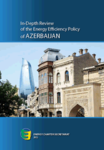
This first in-depth energy efficiency review of Azerbaijan was finalised in September 2012 by a team of experts from Albania and Sweden, officials from the European Union Delegation to Azerbaijan and the energy efficiency team of the Energy Charter Secretariat.

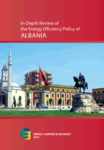
The first In-depth energy efficiency review of Albania was completed in 2012 by a team of experts led by a representative of Switzerland and including representatives of Bulgaria and Italy, supported by the Energy Charter Secretariat.

This report analyses the Energy Charter Treaty provisions on low carbon investment and proposes certain actions for the Energy Charter Conference to consider.

The policy conclusions of the report underline that the development of renewable energy sources is an important alternative to traditional sources, which is helpful not only in addressing climate change issues but also increasing Lithuania's energy independence.

To top