All Publications

Energy Dispute Resolution: Investment Protection, Transit and the Energy Charter Treaty, edited by Graham Coop, General Counsel of the Energy Charter Secretariat, is a compilation of written contributions prepared in the context of a conference organised by the Energy Charter Secretariat, in cooperation with five other well-known legal institutions (the Arbitration Institute of the Stockholm Chamber of Commerce, the British Institute of International and Comparative Law, the International Centre for Settlement of Investment Disputes, the International Chamber of Commerce and the Permanent Court of Arbitration). This highly successful conference took place in Brussels in October 2009. Energy...

The follow-up report is the second one for Bulgaria. Its intention inter-alia is to reflect all relevant changes that have taken place in the country after its accession to the EU. As such, the document covers mainly the period of 2004-2008 and is based on the latest publicly available data for Bulgaria.

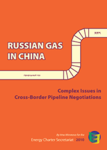
The Russian Far East needs a development plan, and starting exports of natural resources to the Asia-Pacific region might become such a project. There are substantial reserves both in West and East Siberia and the Far East that can serve as a resource base for Russian exports to the Asia-Pacific region. Russia is the largest gas reserves holder in the world; as much as 140 bcm/a, about 16% of its total output, will be produced in East Siberia and the Far East by 2030.

The use of market mechanisms to achieve environmental objectives is growing, with the most notable example being the use of emissions trading schemes to control greenhouse gas emissions. Trading Mechanisms for Energy Efficiency, commonly referred to as White Certificates Schemes, are now in place in a few countries. This study examines these experiences with White Certificates Schemes, identifies the key design features that affect performance, evaluates effectiveness and offers advice on how developed and transition economies might proceed with such schemes.

This document provides a summary of Jordan's overall energy strategy and policies, and detailed information on the policies and institutions set up to improve energy efficiency and renewable energy use in the country. This report was prepared by officials of the Jordanian Government.

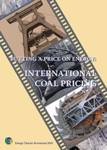
The coal sector has undergone two major changes in the last decade. One change is in the global demand structure: As of 2000 coal demand from developing countries started increasing in an unprecedented way, the bulk of the increase coming from steam coal demand for power generation. Coal has provided China, India and other emerging economies with affordable and dependable electricity supply and fuelled the economic growth in these countries.

This document provides a summary of Croatia's overall energy strategy and policies, and detailed information on the policies and institutions set up to improve energy efficiency and renewable energy use in the country. This report has been prepared by officials of the Croatian Government.

The review confirms that Tajikistan continues to experience severe power shortages but the government puts a lot of effort into attracting foreign direct investment to develop new generation capacity, with several significant projects underway. At the same time, there remain concerns about the implementation of existing legislation and establishing a record of good governance, setting up a comprehensive body of investment-related legislation is crucial.

Worldwide economic stability and development require energy but the vast majority of the world's current power production facilities emit carbon. Solving the challenge of climate change will require, therefore, not only breakthroughs in alternative sources of energy but also new technologies that allow continued use of fossil fuels in an environmentally friendly way. One option for large-scale CO2 mitigation is the use of carbon capture and storage.

The goal of the worldwide trend towards liberalisation of natural gas markets has been to let "gas-to-gas" market competition set prices for the commodity. But international gas markets - and particularly LNG markets - still depart substantially from the competitive ideal, price determination is extremely complex. Pipeline and LNG investments pose special problems for the competitive commodity model.

Energy efficiency standards and labels for appliances and equipment are a proven policy mechanism to reduce costs, energy use and greenhouse gas emissions. Standards and labels ensure that consumers are aware of energy performance when making purchases and that manufacturers produce relatively high-efficiency products.

he Slovak Republic has achieved substantial progress over the last years in the introduction of medium to long-term energy and energy efficiency strategies, in developing specific legislation for energy efficiency, and adopting a concrete action plan, supported by the general move in the country towards EU accession and the interaction with other EU Members. On an aggregate level, progress in energy efficiency was quite significant throughout 2000-2007. While the economy grew by about 50% over this period, final energy consumption increased by only 3%, and primary energy consumption by only 2%. The improvement in energy intensity was considerably larger than for the EU-27.
Italy has focused on delivering sustainable energy in a liberalised energy market. Italy has both a White Certificates Scheme, to promote energy efficiency, and Green Certificates to promote renewable energy. These schemes operate in conjunction with a deregulated energy market and relatively high energy prices. The White Certificates scheme requires careful assessment of energy efficiency savings from projects, and is driving the development of an active Italian energy services market.

Oil and gas are taxed heavily along the supply chain in various ways and for different reasons. Tax revenues from oil and gas exports are a major source of revenue for governments of oil and gas exporting countries, these revenues serve as a compensation for the depletion of a finite resource.

LNG, liquefied natural gas, is a technology to transport natural gas, which allows to monetise large gas fields. Since the first LNG cargo from Algeria to the UK in 1964, LNG trade has been expanding rapidly. Now liquefied natural gas has a worldwide reach and LNG imports are increasingly competing with indigenous production and natural gas transported by pipeline.

To top