
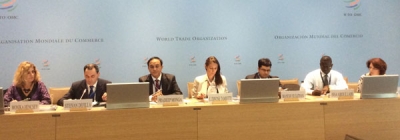
"Why Trade Matters to Everyone" was the theme of the Public Forum held at the World Trade Organization (WTO) headquarters in Geneva on 1-3 October 2014. Within the sub-theme "Trade and Africa", the Energy Charter organised a Working Session "Trade in Environmental Goods as a Catalyst for Implementing the 'Sustainable Energy For All' initiative in Africa" on 2 October.
The Sustainable Energy For All Initiative (SE4ALL), launched in 2011 by the United Nations (UN) Secretary General Ban Ki-moon, provides a wide conceptual framework for sustainable energy development. The Davos initiative, launched during the World Economic Forum in Davos in January 2014, aims at liberalising trade in environmental goods. The Working Session showed that these two initiatives are complementary, that they both aim at improving life conditions for everyone, and that the Energy Charter is the appropriate instrument for developing synergies between the two initiatives to the benefit of all stakeholders.
In addition to Energy Charter experts, the panel included high-level speakers from the United Nations Industrial Development Organisation (UNIDO), the International Centre for Trade and Sustainable Development (ICTSD), the WTO, the European Union (EU), industry stakeholders (General Electric) and the Swiss African Forum (African NGO).
Presentations
Trade in Environmental Goods: Issues, Challenges and Opportunities for Sustainable Energy Access in Africa
by Mr. Mahesh Sugathan, Senior Research Fellow, International Centre for Trade and Sustainable Development (ICTSD)
Energy Charter's contribution to the Davos initiative and sustainable development in African countries
by Mr. Steivan Defilla, Director, Energy Charter Secretariat
Enhancing Energy Sustainability in Africa: Role of Government Agencies and International Organisations
by Mr. Mohammed Abraham, Swiss African Forum, NGO
The Environmental Goods Agreement negotiations and GE
by Ms. Orit Frenkel, Senior Manager, GE Global Affairs and Policy in DC and on the WEC Rules of Trade team (World Energy Council)