
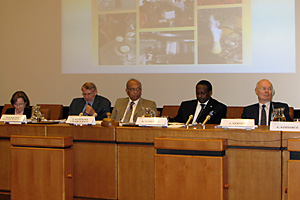
The Secretary General noted that
"the link between energy and development is well established. Modern energy services are indispensable to improving productivity, creating enterprises, increasing employment and incomes, and providing effective public services - such as education and healthcare. Given the fundamental importance of energy for achieving sustainable development, it will not be possible to reach the United Nations Millennium Development Goals by 2015, as agreed by the world's leaders, without increased attention to the provision of energy to the world's poorest societies."
Ambassador Mernier pointed, in particular, to the situation in Sub-Saharan Africa and to the need to promote access to energy services, specifically electricity, as a means to overcome energy poverty. He noted that the Energy Charter Treaty could play a key role in this regard. The Treaty's provisions on investment, transit and arbitration could assist governments, international organisations and private companies to invest the resources required to generate and transmit the electricity necessary to meet future development demands. The Energy Charter Process could also play a vital role through encouraging regional cooperation in electricity trade and providing practical instruments - for example model agreements on cross-border energy infrastructure - to help to achieve this.
The Secretary General informed the Forum participants of the decision of the G8 energy ministers in Rome in April 2009 to make the promotion of broad international cooperation to tackle Africa's energy poverty a priority. At the G8 meeting, ministers invited the Energy Charter to engage African and international institutions in the development of a strategy to combat the continent's energy poverty. The Energy Charter is currently preparing an Action Plan in accordance with the G8 decision and looks forward to developing this initiative further in the near future.