
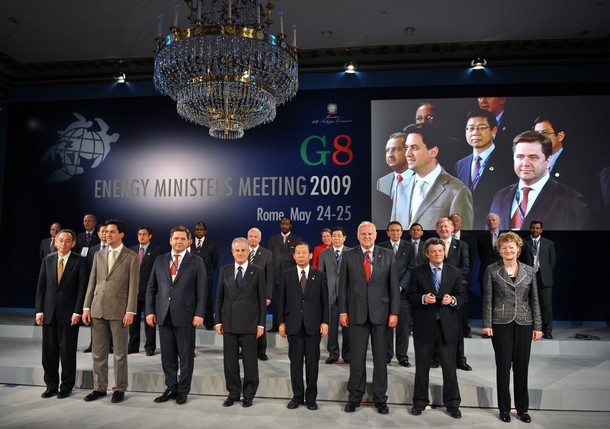
In his speech to the G8, the Energy Charter Secretary General André Mernier noted that while Africa contained important energy resources, past initiatives designed to promote access to energy services for the continent's entire population have had only limited success. Energy investment has been focused primarily on producer countries and relatively little of energy has been available for neighbouring countries.
Finding solutions to this complex challenge is clearly a priority. The Secretary General pointed to the key role that regional cooperation on energy issues could play, particularly in respect to electricity, in order to promote development. Enhanced cooperation amongst the countries of Africa in the area of electricity would offer important technical and commercial advantages, as well as political ones.
The Secretary General highlighted the important contribution that the Energy Charter could make in respect to addressing the energy poverty that affects much of the population of Africa. A key aspect of the work of the Energy Charter is the ability to promote cooperative solutions appropriate to local and regional markets and demands. Indeed, the Energy Charter is already supporting the work of the Regional Task Force on Electricity Cooperation in Central and South Asia, which aims to enhance cross-border trade in electricity and the creation of regional electricity trade.
Concluding, Mr Mernier noted that "a regional approach would benefit from a common legal framework to guarantee investment and to ensure the development of cross-border trade in electricity. Such rules are the basis of the Energy Charter and these can be readily adapted to the specific requirements of African countries."
In the Joint Statement of the meeting, ministers invited the Energy Charter to take a leading role, together with other international organisations, "to prepare a strategy for the development of energy networks and corridors and assuring transit towards the integration of national energy markets in Africa, while identifying financing mechanisms."