All Publications

Both pecuniary (i.e., economic compensation) and non-pecuniary (i.e., orders for specific performance) remedies are available to arbitral tribunals instituted under Article 26 of the Energy Charter Treaty (ECT). However, the award has to expressly provide for the Contracting Party to opt to pay monetary damages in lieu of non-pecuniary remedies in cases of Treaty breaches related to acts of sub-national governments or authorities.

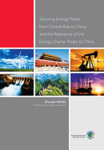
The report analyses the current state of cooperation between China and Central Asian countries in the energy sector. Special attention is given to the benefits and relevance of the Energy Charter Treaty to China. The report is intended for use by China's policy makers defining the country's engagement in international cooperation.

This annual publication gives an overview of the Industry Advisory Panel's activities.

Armenia has been very successful in attracting foreign investment to promote energy production in a sustainable manner. Nevertheless, the development of secure and diversified sources of energy imports remains a pressing issue for the country. This review shows that the Armenia's potential in the electricity sector could be enhanced by improving interconnections with other countries in the region. The Energy Charter Secretariat is preparing to launch a regional task-force on a technical level to address issues of electricity interconnections among the Caucasus countries, which would support the creation of a regional electricity market in the long-term future.

Since 2012 Kazakhstan has adopted a series of legislative acts defining the main requirements in the field of energy efficiency. Currently, the central document is the Law on Energy Saving and Increasing Energy Efficiency. The Government of the Republic of Kazakhstan has also set the target to reduce GDP energy intensity by at least 40% by 2020 compared to 2008 levels.

Since the implementation of the “Reform and Opening-up” policy, over the past three decades, China has maintained a rapid pace of economic growth with an average annual GDP increase of 9.8%. This strong economic performance has very much been underlined by the necessary build-up of accompanying energy infrastructure and the rationalising of energy markets.

When talking about global energy governance, it is important to highlight the fact that this term encompasses the international relations on matters relating to energy, predominantly its production, transit and consumption.

This study focuses on the modernisation of the electricity infrastructure in Central Asia, in particular energy efficiency improvements and clean energy development. The starting point of the analysis is the recognition by the Central Asian states that the modernisation of electricity supply depends on the active participation of private – and in particular foreign – investors in these markets.

Common regional interests and particularly common regional (and, most of the times, global) concerns have been the main drivers of the proliferation of international organisations, at least since the end of World War II. Collective action at the regional level primarily aimed at strengthening links and commonalities among developed and developing countries might be the best framework to describe international relations as we know them today.

Given the ongoing work of the Energy Charter Secretariat on the South Caucasus region, this article gives a snapshot view of the energy markets of the three involved countries. This overview is a starting point for further investigation into the energy policies of Azerbaijan, Armenia, and Georgia, and particularly of the potential role of the Energy Charter in harmonizing policy among the three countries and/or with Europe.

The Knowledge Centre Review's goal is to inform Charter members, observers, partners, and colleagues about Charter activities and at the same time provide them with fresh research on topics of particular importance in today's energy world.

This study investigates how asset exchanges relate to various measures in the sphere of energy security enhancement and contribute to the development of open and competitive markets. It provides an analysis of national antitrust and approval processes in different jurisdictions, as well as the practice of asset swaps in the light of the current economic environment.

The Russian Federation signed the European Energy Charter – a political declaration on the development of multilateral international cooperation in the energy sector – in 1991. In 1994 followed the signing of its legally binding framework – the Energy Charter Treaty and the Energy Charter Protocol on Energy Efficiency and Related Environmental Aspects.

The purpose of this report was to analyse various issues related to electricity transit in selected countries of Central and South Asia, to compare existing transit tariff methodologies and to make recommendations to the respective decision making bodies of the region.

The Turkish economy has achieved high GDP growth rates after it overcame the deepest economic crisis of its history in 2001. This is mainly due to regulations and audits to decrease the banking sector's fragility, sound fiscal policies and mass privatizations of public enterprises. The average yearly growth rate of GDP was about 5% between 2002 and 2012.

To top