
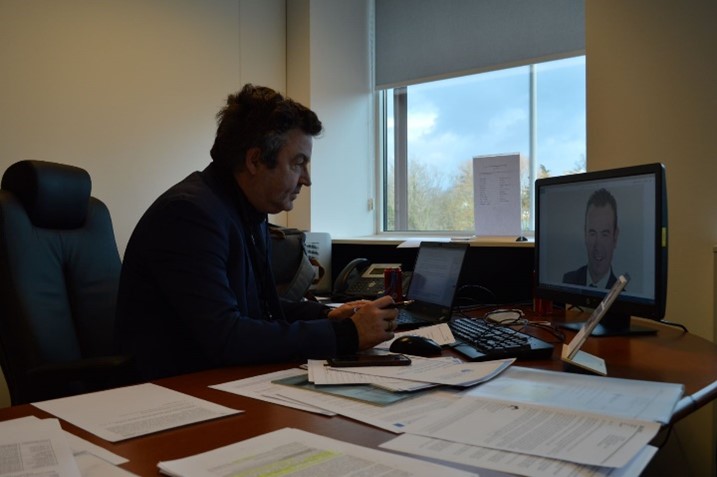
Secretary-General summarised his views on the current status of negotiations on the modernisation of the Energy Charter Treaty. He also shared his opinion on the IAP composition, emphasising the importance of involving more companies from the renewable and the energy efficiency sectors as potential new members of the IAP, so that the Secretariat could learn the views of those at the forefront of the energy transition.
Secretary-General emphasised that the IAP members should utilise their expertise and advise the Secretariat and the Energy Charter Conference by providing expert opinion and consultations in the following areas:
· De-risking renewable energy investment
· De-risking investment in energy efficiency
· Energy transition policies and business plans of the energy companies, in line with the corresponding international agenda
Secretary-General also emphasised the importance of proper understanding of the overall meaning of the provisions of the Energy Charter Treaty by the industry – that the Treaty provides investment protection to all forms of energy, as well as possibilities of its utilisation as the prevention mechanism for potential disputes.
Mr Cayuela elaborated on his involvement in activities of the relevant expert groups besides the IAP and referred to the main outcomes of the Sixth Assessment Report of the Intergovernmental Panel on Climate Change that signal an urgent need for accelerating an effective energy transition process. Mr Cayuela highlighted the importance of innovations for the contemporary energy system and the necessity to shift from reactive to preventive measures. He concluded that investment protection tools have a critical role in making governments, industry and citizens successful in the process of the energy transition.
The parties also discussed some aspects of the energy system’s decarbonisation, including carbon pricing policies and applying specific financial instruments for de-risking the investments. The parties agreed to have a follow-up meeting to discuss and plan the further evolution of the IAP.