
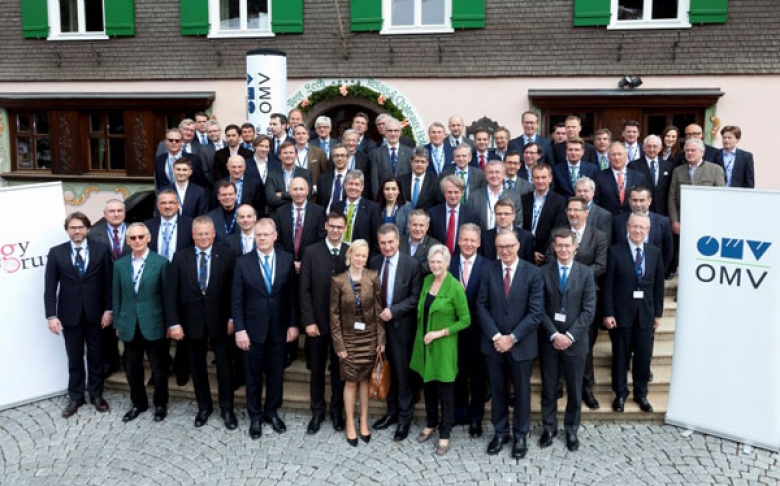
The Secretary General spoke in the session "Global Energy Markets: What Allies for Europe and What Impact Will the Ukraine Crisis Have?" This session attracted much interest among participants, with many wishing to speak up in the debate. The discussion focused on the fact that by 2035 the European Union's share in global energy demand will have dropped from about 12.5% (in 2011) to below 9%, to less than 40% of that of China. Europe's share in the demand for fossil fuels will decline, with one exception, that for natural gas. The Secretary General argued that cooperation and alliances between consumers and producers were not only necessary but were in need of further development. That is where the potential of the Energy Charter lies. Rules of energy cooperation are essential for the development of a system of global energy governance. Dr. Rusnák also referred to the Early Warning Mechanism being proposed by the Energy Charter. Data sharing initiatives are essential to the building of confidence between different players along the energy value chain.
Over the course of the Forum, the Secretary General also had a series of bilateral meetings, including with the EU Commissioner for Energy Mr. Gunther Oettinger, Minister of Energy of Lithuania Mr. Jaroslav Neverovic, Vice-Minister of Economy of Poland Mr. Andrzej Dycha, and the Head of DETEC of Switzerland Ms. Doris Leuthard. The issues discussed in those talks also related to the Ukraine crisis and the resulting tensions in European Union and Russian relations. The Early Warning Mechanism proposed by the Energy Charter was discussed, as well as investment protection, international energy cooperation, the Energy Charter Treaty and its potential for global energy governance.