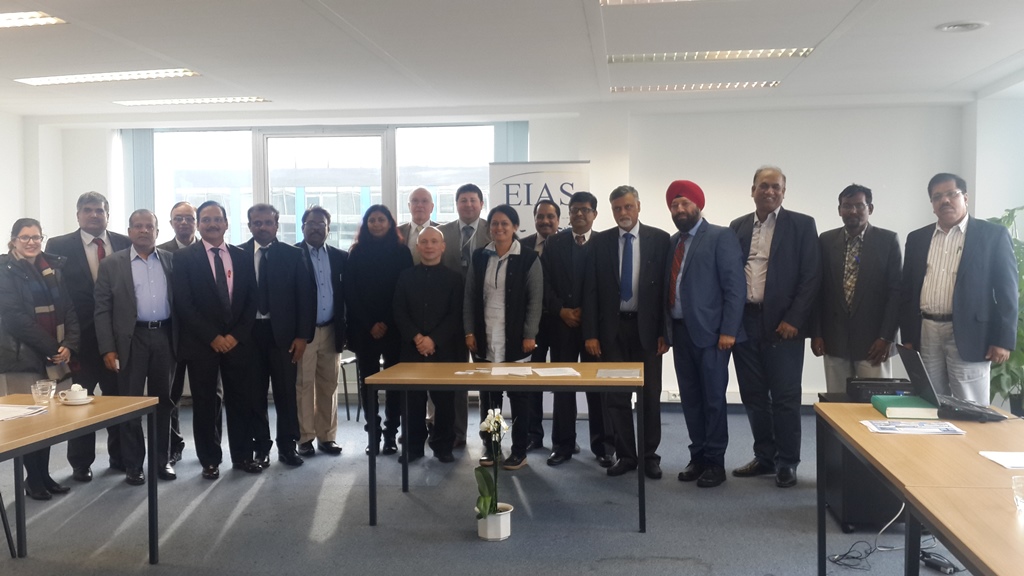
During the Secretariat’s component of the training, Dr Terterov addressed issues related to challenges and opportunities of energy cooperation in Central and South Asia, with a view to expanding on how this relates to India’s energy security interests. Meeting delegates discussed the perspectives of cross-border energy cooperation, prospects of establishing common rules on energy transit and trade, the role of the Energy Charter in investment promotion and protection, and enhancing cooperation through knowledge sharing. The Turkmenistan–Afghanistan–Pakistan–India (TAPI) pipeline was discussed as an example of regional cooperation, connecting energy resources of Central Asia with the energy consuming countries of South Asia. During the meeting the Secretariat delegation also spoke about the Energy Charter Process and the International Energy Charter political declaration. Indian officials expressed interest in the Energy Charter Process while the Secretariat confirmed its readiness to develop cooperation with the Indian government.
Benefits of the International Energy Charter discussed with executive officers of Indian energy companies