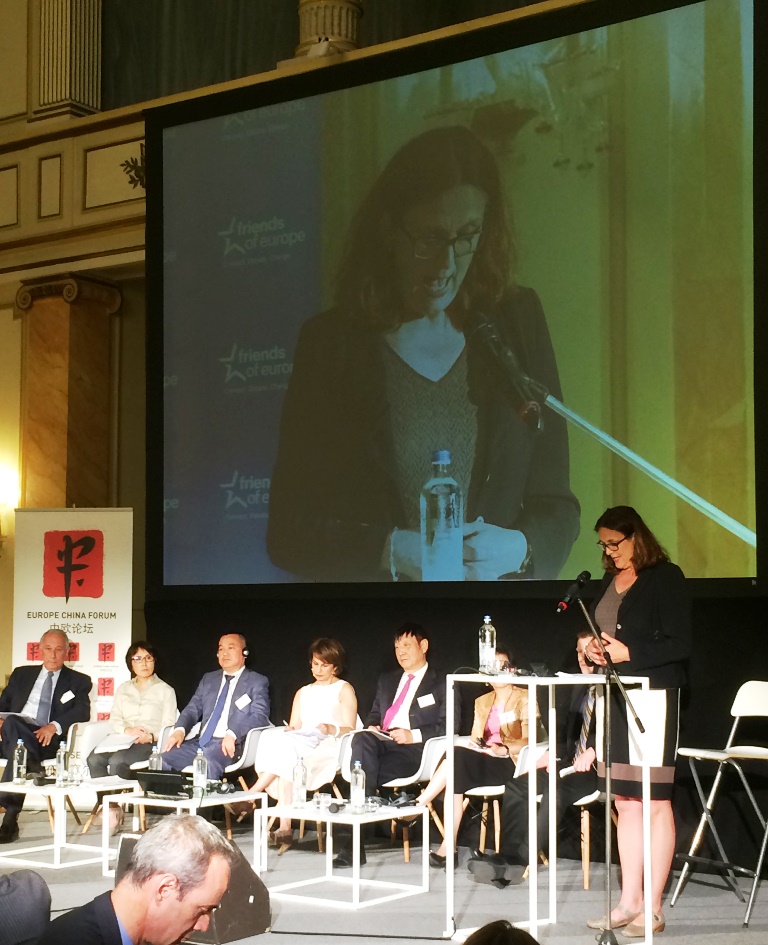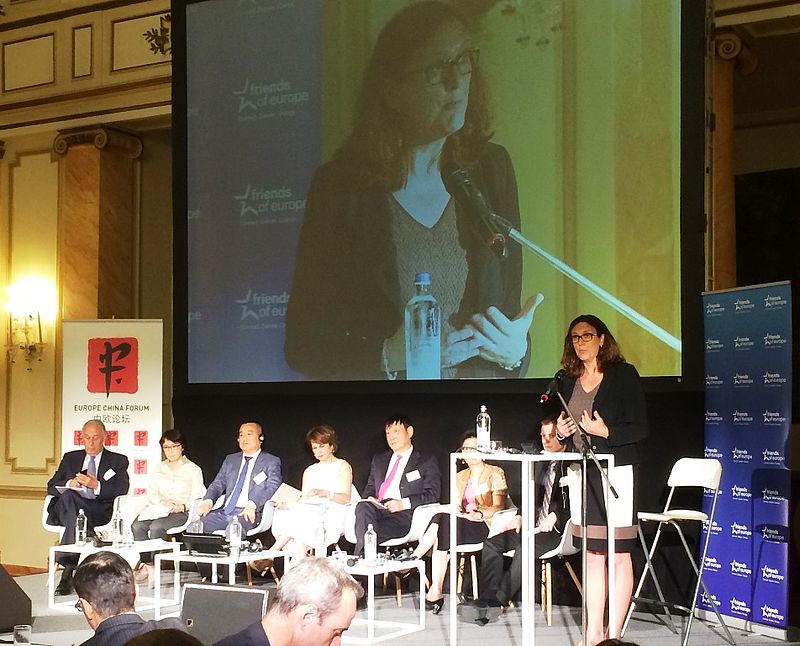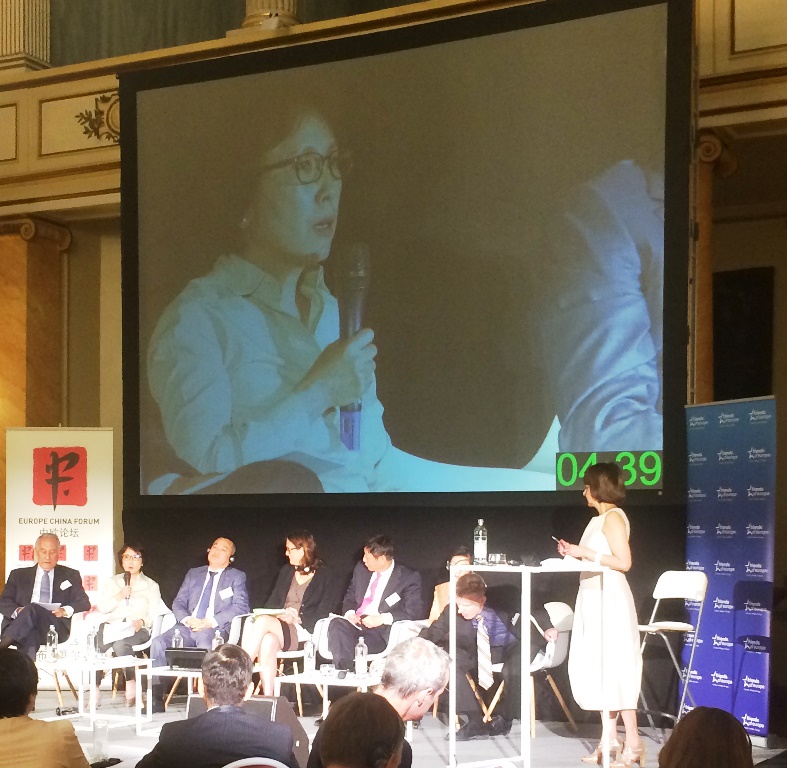
EU Commissioner for Trade, Ms Cecilia Malmström opened the session and stated that “the China of today is not the China of 30 years ago.” Many things have changed and evolved, however one of the “top priorities of EU-China relations is to progress on an agreement on investments”. Energy Charter Assistant Secretary General complemented this point by describing how the Energy Charter Treaty has been instrumental in energy investment in Europe and Asia, and will continue to be so for the foreseeable future. The panel discussion focused on the close energy cooperation as way to promote Climate Change mitigation and sustainable development, which is fundamental to the energy policies of both China and the EU.
Dr Nakata brought attention to the fact that in 2016 at the G20 Energy Ministerial Meeting in Beijing, the European Commissioner for Climate Action and Energy, Miguel Arias Cañete, and Mr Nur Bekri, Vice Chairman of National Development and Reform Commission, and Administrator of National Energy Administration, People’s Republic of China, agreed on a EU-China Energy Roadmap (see article). The Roadmap describes improving trade and investment conditions in the energy sector by “Cooperating within the framework of the Energy Charter Treaty”. In fact many of China’s neighbours are signatories of the Energy Charter Treaty such as Tajikistan, Kyrgyzstan, Kazakhstan, and Japan. It makes logical sense then, in order for China-EU energy relations to evolve, the Energy Charter Treaty represents a valuable starting point.